


Decentralised Autonomous Organisation (DAO)

Human Rights DAO (HRDAO) – Pilot Complete, Next Phase Under Development
A participatory experiment tested with 40 Amnesty advocates Aotearoa New Zealand, Asia, and Europe.
Open-source pilot release now available
The completed Human Rights DAO pilot repository is now publicly available under the stewardship of Amnesty International Aotearoa New Zealand. The release brings together the project’s governance research, open-source code, tokenomics modelling, pilot evidence, evaluation, security guidance and long-term stewardship documentation.
View the Human Rights DAO Pilot Repository v1.0
The release is a public-interest reference implementation and permanent record of the completed pilot. It is not a production deployment or live public DAO. For implementation assistance please contact us.
The HRDAO pilot has now been completed.
Big thanks to Project Catalyst and the Cardano Blockchain eco-system for their support.
This phase brought together advocates across Aotearoa New Zealand, Asia, and Europe to test a working prototype of participatory governance within Amnesty. Participants engaged with core features including proposal creation, voting, and token-based participation, providing valuable insights into usability, accessibility, and governance design.
You can view the pilot explainer video below, which outlines the approach and context for this work; and the Info Sheet for the Pilot here.
These artefacts, and the feedback from participants, inform the design of the next phase, particularly in relation to accessibility, participant onboarding, and governance clarity across diverse contexts. The pilot application was deployed across Android and iOS.
Thanks to the team at Matou.nz for the app development.
We extend our thanks to all advocates who participated in this first phase. Their insight, curiosity, and care have directly informed the next stage of development, focused on strengthening how participation can be recognised and translated into governance within a global human rights movement.
This is not a prototype in isolation, but the first iteration of a repeatable governance model tested in real-world conditions.
Please see the . Further phases of development and testing are now in progress.

A NEW RESEARCH PROJECT
Amnesty International Aotearoa New Zealand is undertaking a research project on decentralised and distributed technology using blockchain tools, to understand how they may amplify supporter engagement within the worldwide movement and provide a novel form of incentivisation for positive human rights advocacy and action taking. This research is led by the Aotearoa New Zealand office.
The resulting from the first stage of research looks at member and public engagement in Amnesty International through the lens of digital democracy and innovation, and proposes a use of transformational technology to revitalise the role of the Amnesty participant, through decentralised decision-making and governance rights, capacity building and the incentivisation of positive action taking.
At a crucial time in organisational evolution, it is proposed that Amnesty offers new ways for supporters to engage and the public to join the movement through a decentralised structure with distributed intelligence. The main emerging technology we interrogate is blockchain. We firstly look at some high-level considerations, and then how they merge with various aspects of blockchain technology, and also the concept of a Decentralised Autonomous Organisation (DAO).
HRDAO Amnesty Pilot App Walkthrough Video
MOVING INTO STAGE TWO OF THE RESEARCH
We have received support from Cardano Blockchain's Project Catalyst eco system to develop a DAO mvp and human rights token in 2025.
OUR VISION FOR THIS INNOVATIVE PROJECT
Record the Unforgettable
Implement an immutable ledger to capture and preserve every human rights micro-engagement, providing an invaluable historical record.
Amplify Voices
Create a platform where our supporters, the public and institutions can collaboratively shape the discourse on Human Rights, infusing it with diverse perspectives, including those of Indigenous groups and other allies.
Illuminate Transparency
Bolster transparency in our advocacy operations ensuring trust in the process.
Empower Decision-making
Utilise blockchain to enhance decision-making processes, ensuring inclusivity and facilitating governance.
Encourage Participation
Drive widespread participation and encode incentive mechanisms, transforming passive supporters into active advocates for human rights.
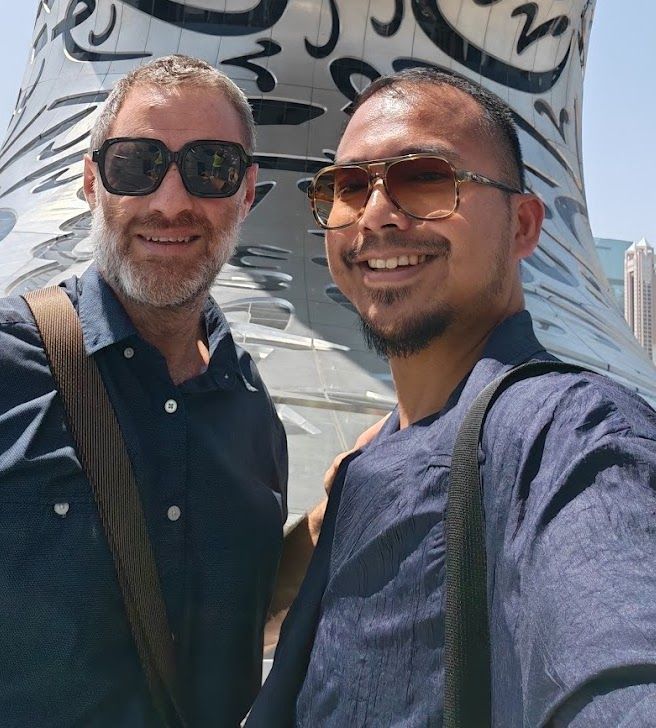
THE TEAM
Project Lead - Gareth Farry
Gareth is the Partnerships and Special Projects Manager at Amnesty International Aotearoa New Zealand. Gareth is a creative producer and technologist working on innovative and disruptive technology solutions for supporter coordination and the incentivisation of human rights advocacy. He focuses on cultural leadership, technology and equitable value add.
Project Tech Lead - Razali Samsudin
Razali is an experienced educator, and independent researcher with 20 years of experience working in education, sustainability and impact fields in a wide range of roles and projects that explore the interplay of pedagogy, gamification, blockchain, sustainability, decentralisation, A.I., data, privacy and disruptive innovation, while guided by the vision of seeking to bring about an equitable world for all.
PROJECT TIMELINE
Q2-3 2024: Initial Research Phase

Q4 2024: Project Catalyst application successful
Q1-2 2025: Project Catalyst research, building and development begins
Q3 2025: Pilot HRDAO app launched to select group of participants in NZ, Australia, Asia and EU.
Q4 2025 - DAO sandbox live testing and refinement. Summary report and next phases for building towards public deployment in 2026.
Q1 2026 - Summary report and next phases being planned for building towards full public deployment in 2026-7.