


When neutrality silences human rights, democracy is at risk
By Jacqui Dillon
Executive Director | Kaiwhakahaere
Amnesty International Aotearoa New Zealand
This article originally appeared in The Post | Te Upoko o Te Ika on 28 January, 2026. Read it here.
Two New Zealand Government-funded entities recently refused outdoor advertising space for an Amnesty International campaign about critical thinking and public discourse on human rights.
Greater Wellington Regional Council were concerned with an ad’s subtle reference to Gaza. Meanwhile, Auckland Transport said the ads weren’t in line with their advertising policy, highlighting clauses about containing “images or messages which relate to matters of public controversy and sensitivity” and content that is “likely to cause widespread or serious offence to members of the public.” Perhaps more concerning is that neither organisation accepted our request to meet or discuss the concerns.
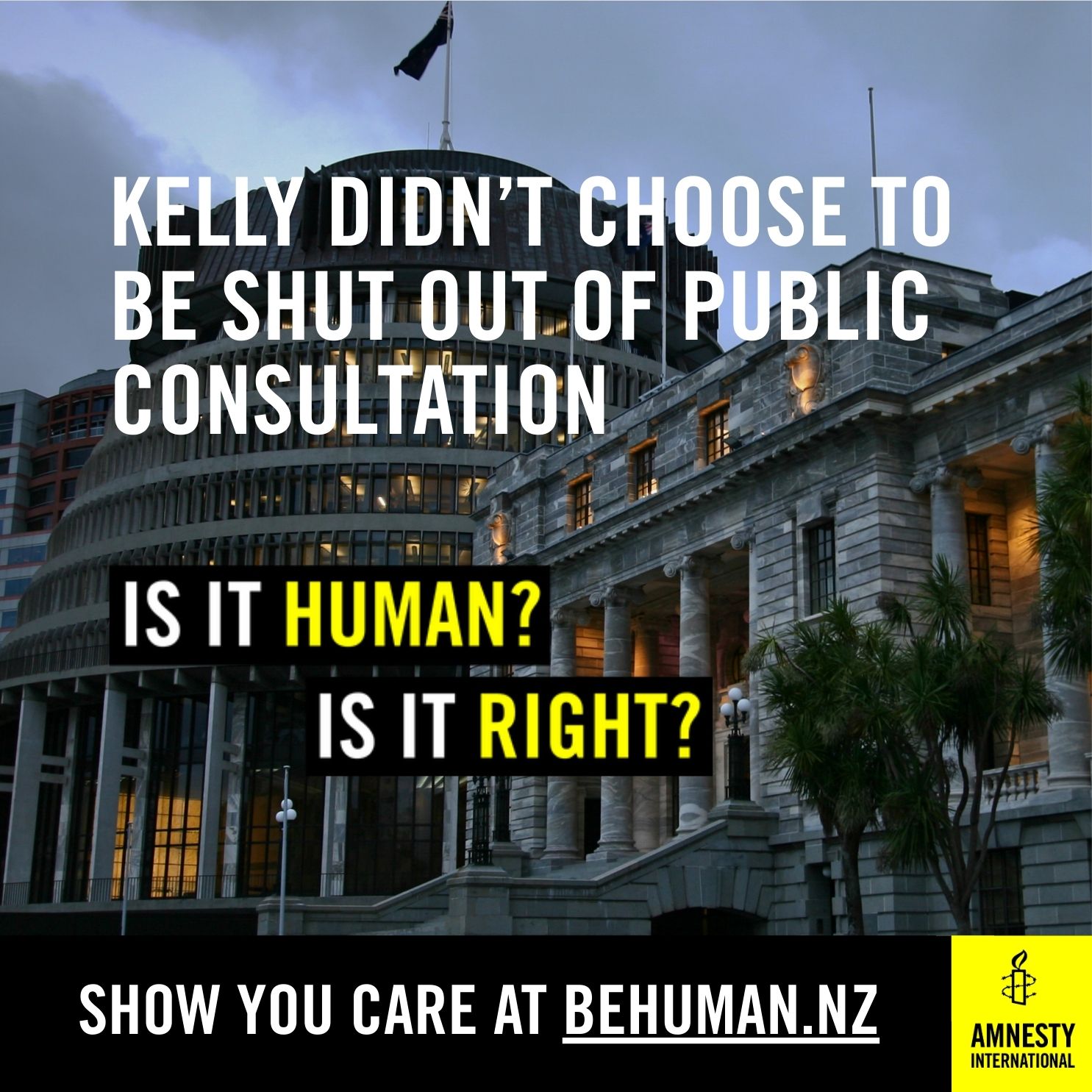
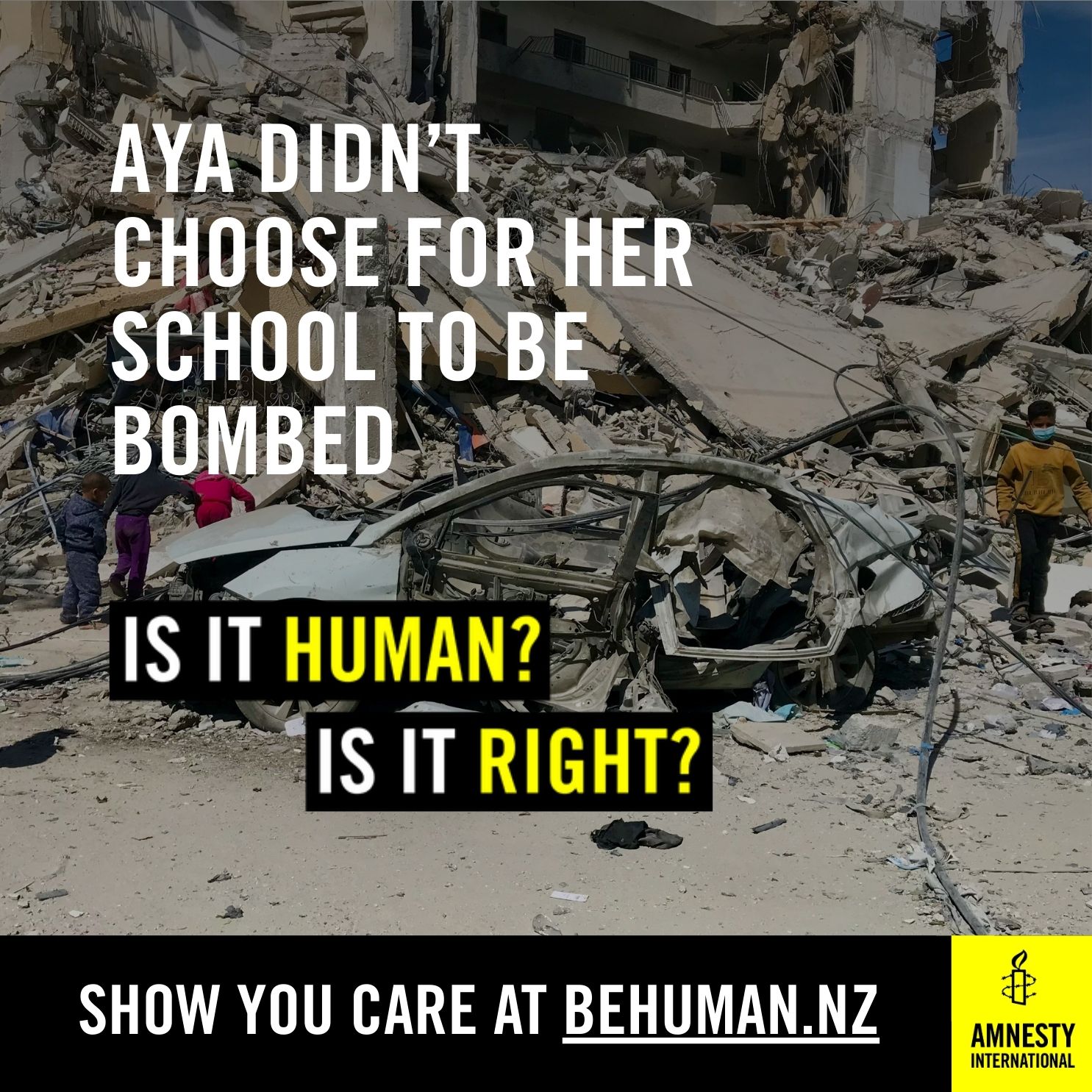
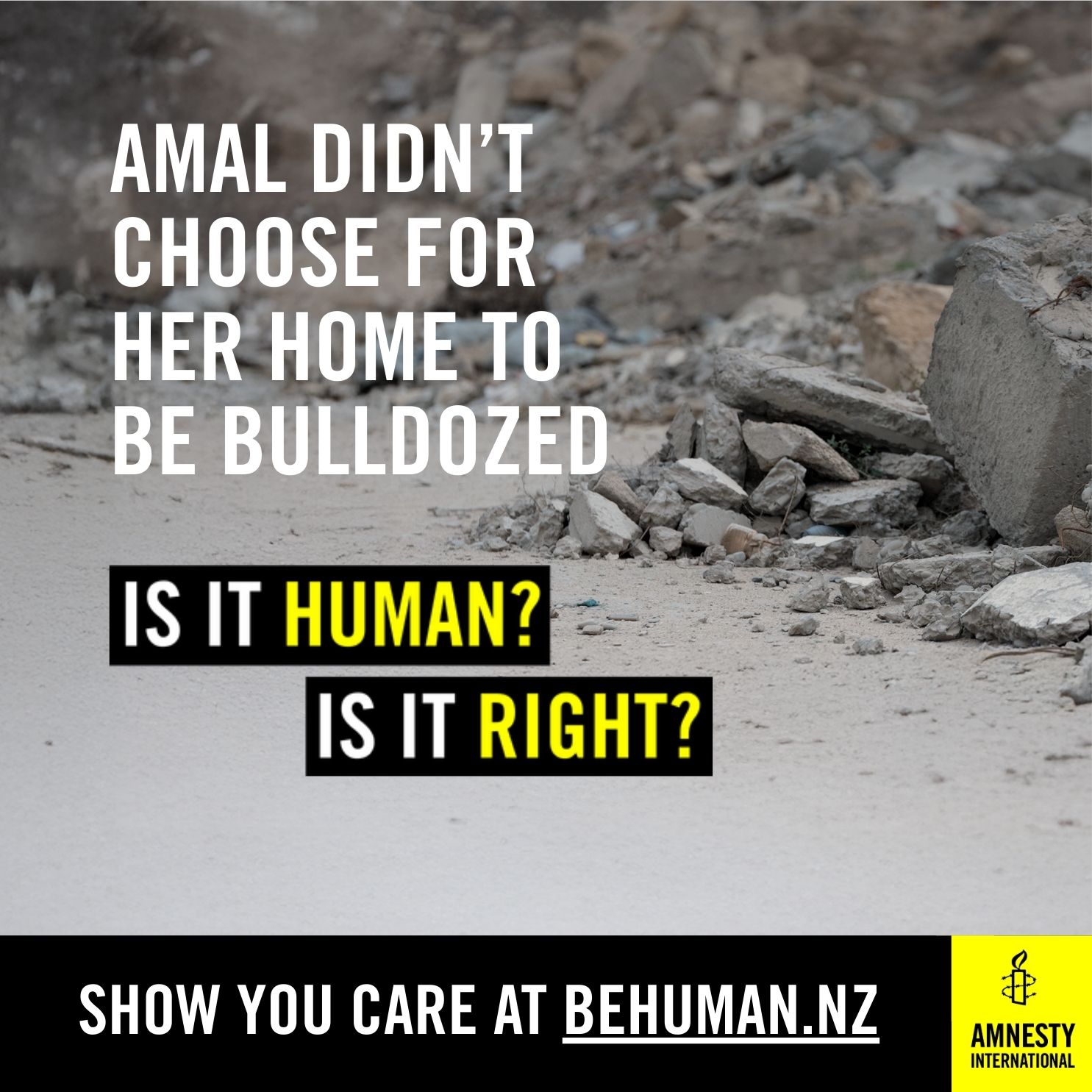
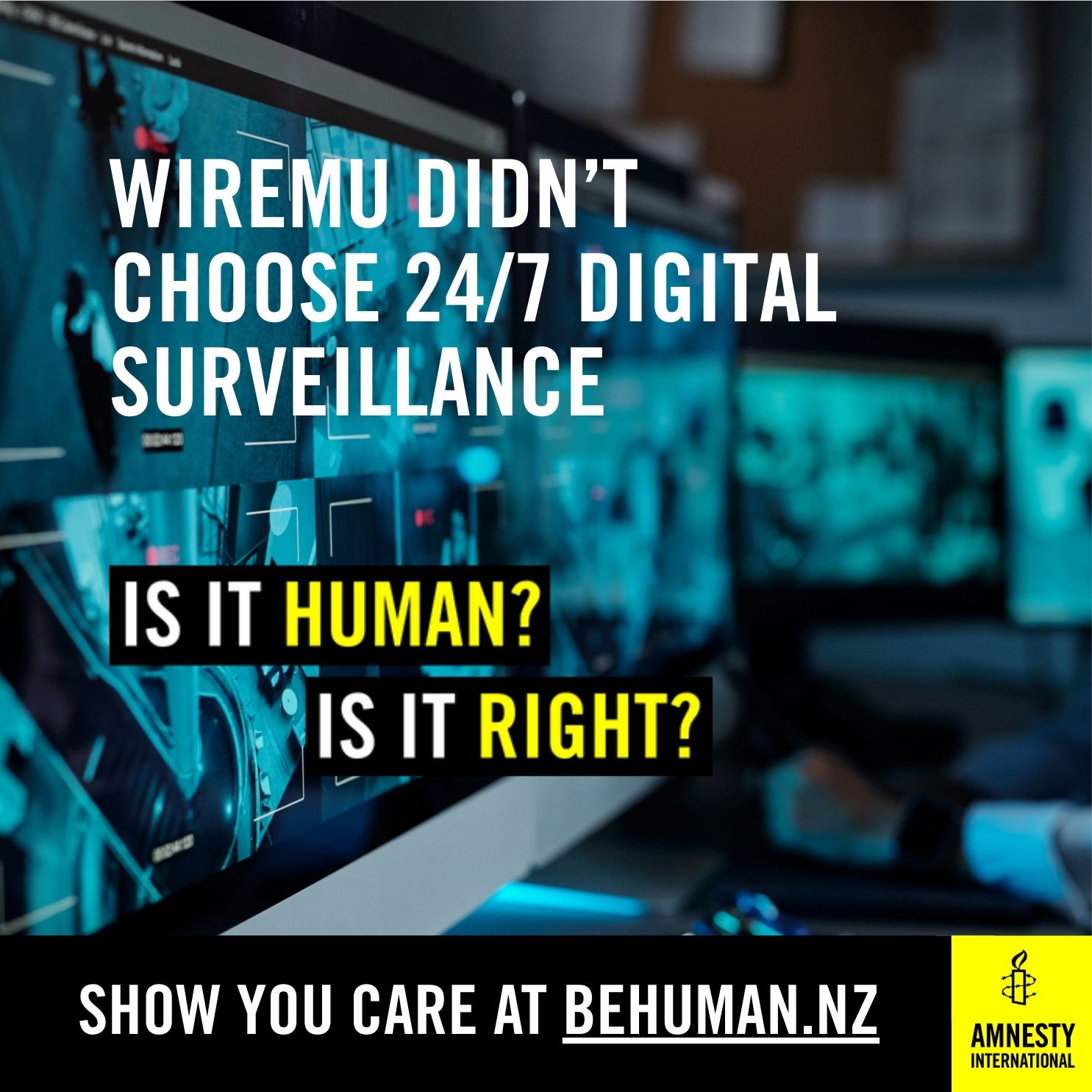
The ads included a photo of the Beehive with the text, “Kelly didn’t choose to be shut out of public consultation”, a photo of a destroyed building with the text, “Aya didn’t choose for her school to be bombed”, a photo of computer screens with the text, “Wiremu didn’t choose 24/7 digital surveillance”, and similar images. Each of the ads also posed the question: “Is it human? Is it right?”
Humanity thrives on the exchange of ideas and debate. But it’s important to point out that this does not mean anything goes. Speech can cause very real and serious harm. As a society we have long recognised limitations are required to protect against such harm.
However, considering the different standards and laws in place it is hard to see how Amnesty International’s ads would have breached any such standard. In fact, when we were turned down by Greater Wellington Regional Council and Auckland Transport, the same print ads were run by Lumo and Phantom Billstickers. No complaints ensued.
It is vitally important that debate can challenge norms and Government positions without being suppressed. Neutrality isn’t neutrality if voices questioning the status quo of those in power are silenced. Do we want to live in a society where questioning the Government’s actions – or lack thereof – in relation to genocide, or a wide range of other issues, is deemed to be “sensitive” and therefore shut down? Government funding should not equate to selective storytelling. Instead, it should empower platforms to share diverse perspectives, while remaining truthful and avoiding serious harm.
These are, after all, the very principles governments claim to uphold. It is both human and right that we all demand transparency, dialogue and respect for fundamental human rights in public institutions.
As we move along 2026, with an election and a range of decisions that will have long-lasting repercussions, Aotearoa New Zealand needs to be clear about what’s happening and where we’re headed.
These discussions are important to have. Especially as we are seeing red flag after red flag, with evidence of increasing disregard for fundamental human rights is piling up.
What we’re seeing is a trend of Government rushing through legislation without adequate oversight and a meaningful opportunity for everyone to have a say. We’re seeing the current Government utterly disregard Te Tiriti o Waitangi, which is a fundamental part of our constitutional make-up.
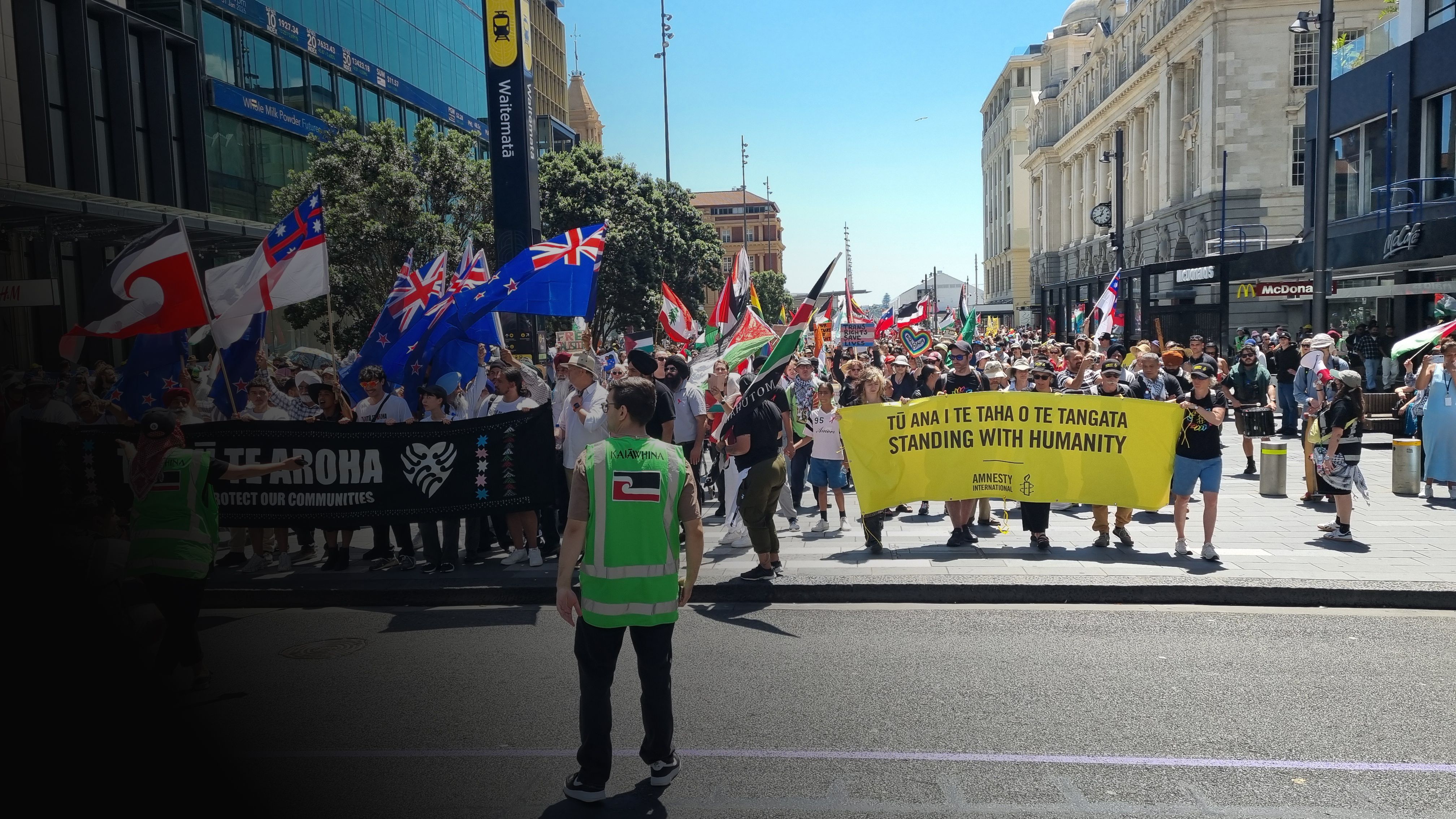
We’re seeing threats to core human rights, including limitations to the right to protest – with a proposal being considered by Government that could allow Police to set conditions around the way a protest must be conducted – and voting rights, for example, taking away the right to vote for people in prison, which recently passed its 3rd reading.
We’re seeing decades of failure to address key policy issues, from climate change to our healthcare system to infrastructure. We’re seeing elected representatives, people with great power, show distain for international processes of accountability for human rights abuse – the very processes that exist to protect us citizens.
When visiting communities and talking to people across the country, one thing that always seems to stick out is a deep frustration with our political system, especially the ongoing denial of meaningful influence over their own destiny.
Is New Zealand a mirror image of the dramatic changes that have taken hold in the US? No.
We’re not seeing the dramatic collapse of democratic government we might associate with coups and conflicts. Instead we’re seeing something quieter, slower, and arguably more insidious: the steady weakening of democratic foundations, checks and balances, and the erosion of public participation.
No country is immune from authoritarian practices. It’s by ignoring the warning signs and letting the “little” transgressions go that we start the slow but steady chipping away of our democratic foundations. As the erosion progresses, it leaves space for authoritarian practices to grow. We need to say no to the red flags in order to maintain a stable home for us all.
At a recent public lecture at the University of Auckland, the Secretary General of Amnesty International, Agnès Callamard, recounted talking to someone that morning who said, “These are worldwide trends, but why do we have to join them?” Indeed, we should not.
So, what then is the antidote? Step one for Aotearoa New Zealand is upholding Te Tiriti and the tino rangatiratanga it guarantees. In doing so we can build a strong foundation that provides a place for us all to belong, for respectful relationships to flourish and a just foundation for how we can make decisions together.
When our systems are designed so we can all make a meaningful contribution, we can all benefit in so many ways, including more well-rounded and informed decision-making, stronger communities, and feelings of belonging and connection.
It won’t work to leave this all to decision-makers. We in communities must ourselves force action. This might sound daunting, but it actually starts with simply coming together to explore how we can strengthen our society.
This moment is bigger than any one issue. It’s about recognising a slippery slope when we’re on it. But if there’s one thing I know, it’s that change is a given. So let’s make sure that change is towards the future we want. This starts with questioning where we’re headed and how things can be different.
Complacency is the adversary of democracy. Renewal requires a moral compass. We have to have the courage to call out democratic backsliding before it hardens into habit. We will be best served if we continue to ask those holding the pen (power) the simple questions: Is it human? Is it right?
So take the next step, whether it’s with a local cause or national movement. Your voice matters and is needed now.